| MEP Desk | Middle East Politics |
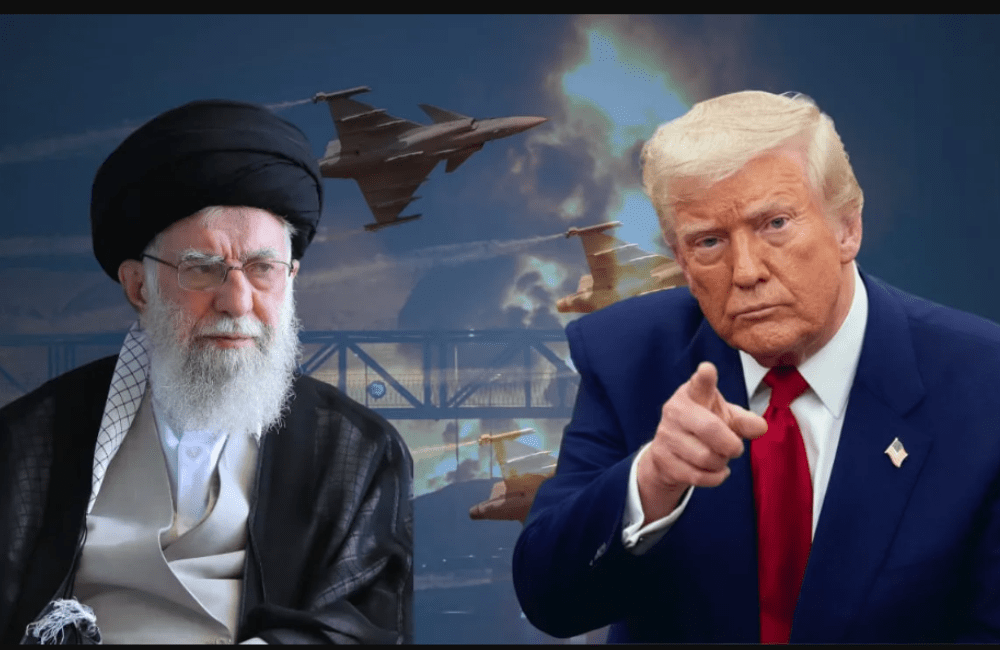
On the evening of June 23, 2025, the volatile trajectory of Middle Eastern geopolitics reached a new flashpoint as Iran launched a barrage of missiles at the Al Udeid Air Base in Qatar. This calculated retaliation, dubbed Operation Glad Tidings of Victory, came just a day after the United States unleashed devastating strikes on Iranian nuclear facilities, acts that marked Washington’s first direct entry into the Iran-Israel war.
The attack on Al Udeid, the U.S. military’s Central Command headquarters in the region, was not unexpected. In fact, Iran had given advanced warning to both the U.S. and Qatar, echoing its previous signaling tactics after the 2020 killing of General Qasem Soleimani. Yet even with prior notice, the strike sent shockwaves across the Middle East and into diplomatic halls worldwide.
In the hours leading up to the missile launch, satellite imagery had already shown Al Udeid nearly devoid of aircraft. The U.S. had begun evacuation procedures in anticipation and Qatar closed its airspace to incoming threats. When the missiles finally arrived, short and medium-range ballistic weapons, Qatari and U.S. defenses responded swiftly.
According to the Pentagon, 13 missiles were intercepted and a 14th landed harmlessly. No casualties were reported, though Iranian state media framed the operation as a devastating blow. The symbolic nature of the attack was unmistakable: one missile for every American bomb that struck Iranian soil the day prior.
The broader backdrop to this dramatic episode is rooted in the rapidly escalating Iran-Israel conflict, which flared into open war after Israel’s strike on Iranian nuclear facilities and high-level assassinations on June 13. While Iran has long maintained that its nuclear program is for peaceful purposes, a shift occurred in the spring of 2025.
U.S. officials, despite earlier intelligence assessments asserting Iran was not actively building a bomb, began to raise alarm. On June 10, General Michael Kurilla warned that Iran could enrich uranium to weapons-grade within a week. Two days later, the IAEA declared Iran non-compliant with nuclear obligations, for the first time in two decades.
What followed was a series of military escalations, culminating in the U.S. launching Operation Midnight Hammer, targeting Fordow, Natanz and Isfahan with stealth bombers and submarine-launched Tomahawks.
Iran’s missile strike on Al Udeid was the first of several retaliatory actions. Simultaneously, Iranian drones targeted U.S.-linked bases in Iraq, including Taji, Imam Ali and the Victory Base Complex near Baghdad Airport. Iraqi radar systems reportedly suffered significant damage, although no fatalities were reported.
These attacks drew condemnation from the Iraqi government, which labeled them cowardly and treacherous, reflecting Baghdad’s delicate balancing act between maintaining sovereignty and avoiding entanglement in a regional conflict.
While Iran emphasized that the attack on Al Udeid was strictly retaliatory and not directed at Qatar, its “friendly neighbor”, the Gulf state did not take the matter lightly. Qatar condemned the strike as a violation of its sovereignty and summoned the Iranian ambassador.
The Qatari Ministry of Foreign Affairs warned of potential consequences and asserted its right to respond proportionately. In the UN Security Council, Qatar reiterated its demand for respect under international law, suggesting that Iran’s missile strike crossed a red line.
President Donald Trump, ever inclined toward dramatic diplomacy, downplayed the attack, calling it a “very weak response” and praising Iran for the advance warning. His statement seemed aimed at preserving a narrow diplomatic off-ramp amid growing tensions.
Remarkably, just hours after the strikes, Trump announced a ceasefire proposal: Iran would cease hostilities by midnight on June 24, followed by Israel 12 hours later. According to a senior Iranian official, the offer came through Qatari mediation and was accepted in principle, a surprising pivot from aggression to diplomacy within a single day.
International reaction was swift and wide-ranging. Gulf states including the UAE, Bahrain and Saudi Arabia issued strong condemnations, reaffirming solidarity with Qatar and denouncing Iran’s breach of sovereignty.
From North Africa to Europe, leaders echoed similar concerns. Egypt, Jordan and Morocco criticized the missile strike as destabilizing, while France’s President Emmanuel Macron urged all sides to de-escalate and return to dialogue. Algeria and Mauritania highlighted their support for Qatar’s sovereignty, calling for restraint to avoid regional catastrophe.
Interestingly, Canada’s Prime Minister Mark Carney took a more nuanced stance, calling the Iranian strike “proportionate” and “diplomatic,” suggesting that it might open a pathway to negotiation rather than war. Oman also broke ranks slightly, condemning the attack but holding Israel accountable for initiating the sequence of escalations.
These varied responses revealed the complex geopolitical chessboard on which the Iran-Israel-U.S. triangle now operates, with each move reverberating far beyond its immediate target.
For Iran, the attack on Al Udeid was not just retribution but a strategic message. The Revolutionary Guard warned that continued U.S. aggression would threaten the entire American military infrastructure in the region. Ayatollah Khamenei framed the operation as a defensive act, insisting Iran harmed no one and sought only to protect its national integrity.
Simultaneously, Iran maintained its commitment to the Non-Proliferation Treaty, signaling an intent to remain within the international framework, despite recent threats to withdraw.
As the dust settles, at least temporarily, the missile strike on Al Udeid marks a significant moment in the evolving conflict. It demonstrates Iran’s willingness to strike back directly at U.S. military targets while carefully managing escalation.
It also underscores the fragility of Gulf security, where military alliances, diplomatic negotiations and historical enmities intersect in dangerous ways.
Whether the ceasefire holds or unravels, the events of June 23, 2025, will be remembered as a pivotal episode in a conflict that continues to test the limits of deterrence, diplomacy and the durability of peace in one of the world’s most combustible regions.
[This article was later updated on June 30, 2025]




 Middle East Politics Blog