| MEP Desk | Middle East Politics |
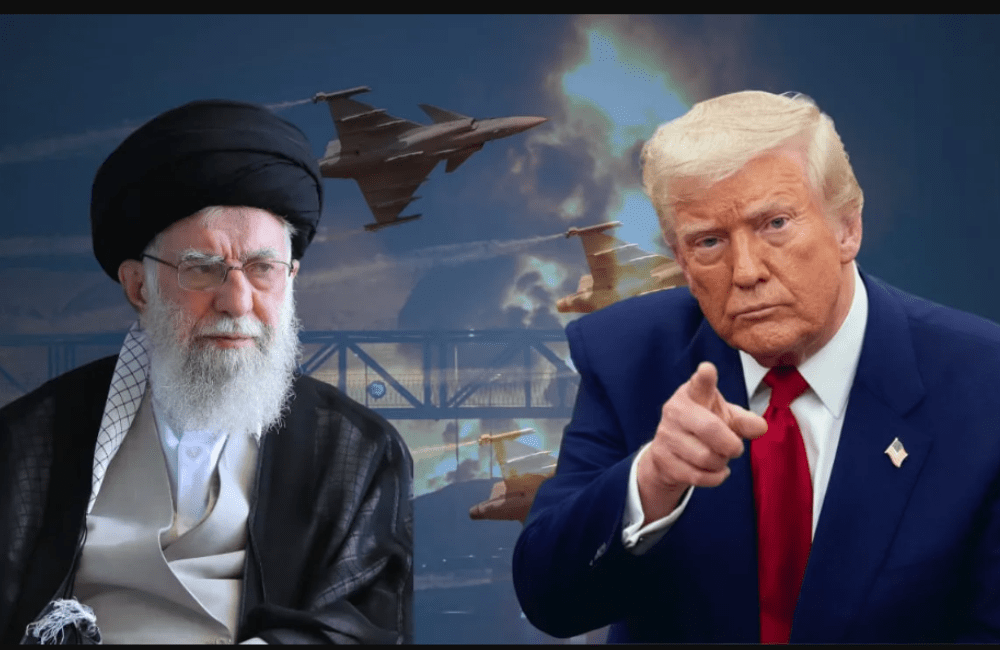
In the early hours of June 22, 2025, the United States decisively entered the escalating Iran-Israel conflict with a coordinated, high-stakes military strike that reverberated across the globe. Codenamed Operation Midnight Hammer, the offensive marked the first direct American military action in the war that began just nine days earlier when Israel launched a surprise series of attacks on Iranian positions.
In this dramatic escalation, U.S. Air Force and Navy forces targeted three of Iran’s most fortified nuclear facilities: the Fordow Uranium Enrichment Plant, the Natanz Nuclear Facility and the Isfahan Nuclear Technology Center.
Utilizing the military’s most advanced bunker-busting weaponry, the United States deployed fourteen GBU-57A/B Massive Ordnance Penetrator bombs, each weighing 30,000 pounds, delivered by Northrop B-2 Spirit stealth bombers. These were supported by Tomahawk missile strikes launched from a U.S. submarine in the region.
The mission aimed to cripple Iran’s nuclear program in one swift, overwhelming blow. U.S. President Donald Trump declared the strikes a resounding success, stating that the attack had “completely and totally obliterated” Iran’s ability to enrich uranium and continue its nuclear pursuits.
Despite the president’s confident proclamation, a more nuanced picture began to emerge as intelligence officials leaked preliminary assessments. Early reports suggested that while the strikes had caused significant damage, the destruction might not have been as total as claimed.
Analysts indicated that the underground bunkers housing key enrichment equipment at Natanz and Fordow may have withstood some of the impact, owing to their deep subterranean construction and reinforced designs. The full bomb damage assessment remains pending, casting uncertainty over the true strategic effectiveness of the operation.
On Capitol Hill, reactions were sharply divided. Congressional Republicans broadly rallied behind the president’s decision, framing the strikes as a necessary move to prevent Iran from achieving nuclear breakout capability.
However, many Democrats, and a notable minority of Republicans, voiced serious reservations. Questions about the constitutional authority of the executive branch to initiate such a large-scale offensive without Congressional approval resurfaced, alongside broader concerns about the potential for regional escalation and long-term geopolitical consequences.
The international response mirrored the divisions within the U.S. While some of America’s traditional allies, including Israel and a few European nations, expressed cautious support for the effort to neutralize what they viewed as a dangerous threat, others condemned the strikes as reckless and destabilizing.
In the Middle East, the operation was viewed with particular alarm. Tehran responded swiftly and forcefully, launching a retaliatory strike on a U.S. military base in Qatar, signaling its readiness to confront American forces directly.
Amid mounting global tension and fears of a broader war engulfing the region, President Trump took to national television the following day to announce a ceasefire agreement between Iran and Israel.
The announcement stunned observers and introduced a moment of cautious relief. While the details of the ceasefire remained unclear and its durability uncertain, the sudden diplomatic breakthrough momentarily pulled both nations back from the brink of a prolonged and devastating conflict.
The events of June 22 have left the international community grappling with a cascade of new questions. What prompted the United States to act so decisively and was the gamble justified by the results?
What level of damage was truly inflicted on Iran’s nuclear infrastructure? And most critically, has Operation Midnight Hammer pushed the region closer to stability, or merely paused an inevitable and possibly far more dangerous, second act?
As the dust settles, the world watches closely, aware that the next moves may determine the trajectory of conflict and diplomacy in the Middle East for years to come.
[This article was later updated on June 30, 2025]



 Middle East Politics Blog